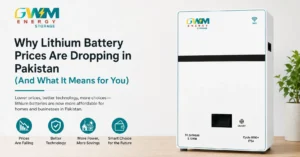
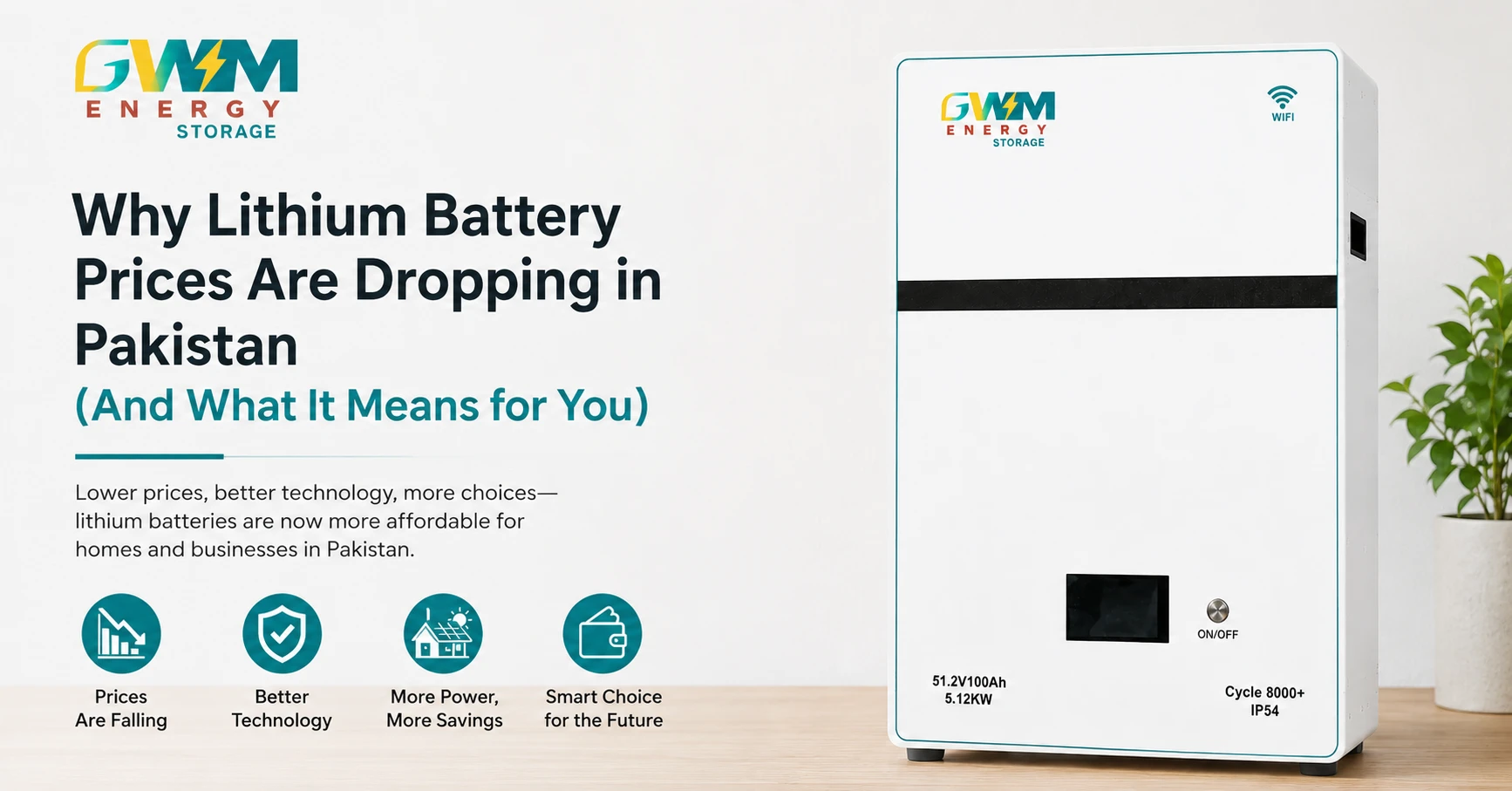
Why Lithium Battery Prices Are Dropping in Pakistan (And What It Means for You)
If you have been considering a solar energy storage system, you may have noticed an important change in the market: lithium battery prices in Pakistan are becoming more affordable. Batteries that were once considered a premium option for homes and businesses are increasingly becoming a practical alternative to traditional lead-acid batteries.
This change is not limited to Pakistan. Lithium-ion battery costs have been falling globally as manufacturing capacity expands, competition increases, and LiFePO₄ (Lithium Iron Phosphate) technology becomes more widely adopted. BloombergNEF reported that average lithium-ion battery pack prices reached a record low of $108 per kWh in 2025, down 8% from 2024. Stationary energy-storage battery packs experienced an even larger decline, falling to an average of around $70 per kWh.
So, why are lithium batteries becoming cheaper, and what does this mean for Pakistani homeowners, businesses, and solar users?
1. Global Lithium Battery Production Has Increased
One of the biggest reasons behind falling lithium battery prices is the rapid expansion of global manufacturing.
China, the world’s dominant battery manufacturing hub, has developed enormous lithium battery production capacity. In some areas, battery cell production capacity has grown faster than demand. This creates intense competition among manufacturers, encouraging suppliers to improve technology while reducing prices.
BloombergNEF identifies manufacturing overcapacity and strong competition among battery producers as important factors behind recent battery price declines.
For Pakistan, which depends heavily on imported battery technology and components, lower international battery costs can eventually translate into more competitive prices in the local market.
2. LiFePO₄ Technology Is Becoming More Affordable
Another important factor is the growing popularity of LiFePO₄ batteries.
Lithium Iron Phosphate technology has become particularly attractive for solar and stationary energy storage because it combines long cycle life, strong thermal stability, and competitive manufacturing costs.
According to BloombergNEF’s 2025 battery survey, average LFP battery packs across different applications reached approximately $81 per kWh, compared with around $128 per kWh for nickel manganese cobalt (NMC) battery packs.
This matters in Pakistan because LiFePO₄ technology is increasingly used for home solar storage, commercial backup systems, and larger Battery Energy Storage Systems (BESS).
GWM Energy, for example, focuses on LiFePO₄ batteries alongside residential, commercial, and industrial energy-storage solutions equipped with intelligent Battery Management Systems (BMS).
3. Competition in Pakistan’s Solar Market Is Growing
Pakistan’s solar market has expanded significantly, and batteries are becoming an increasingly important part of complete solar solutions.
Consumers today can choose among numerous lithium battery brands, capacities, configurations, and suppliers. Greater competition puts pressure on sellers to offer better value rather than relying on high margins.
Local market pricing still varies considerably according to brand, capacity, BMS quality, warranty, inverter compatibility, and installation requirements. One recent Pakistani market guide estimated typical installed lithium-storage pricing at roughly PKR 45,000–65,000 per kWh, illustrating how widely prices can differ between entry-level and premium solutions.
Therefore, buyers should compare more than the sticker price.
4. Manufacturing Is Becoming More Efficient
Battery manufacturers are continuously improving production methods.
Automation, larger factories, standardized battery cells, improved supply chains, and better pack designs allow manufacturers to produce more storage capacity at a lower cost.
At the same time, manufacturers can now integrate sophisticated Battery Management Systems that monitor important operating conditions and help protect battery performance.
GWM Energy’s storage solutions, for instance, combine LiFePO₄ technology with intelligent BMS functionality for applications ranging from residential backup to commercial and industrial energy storage.
As these technologies reach larger production volumes, advanced energy storage becomes accessible to a broader range of customers.
5. Solar Users Are Looking Beyond Traditional Lead-Acid Batteries
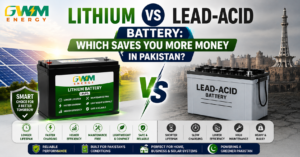
For years, lead-acid and tubular batteries were common choices for UPS and solar backup systems in Pakistan because their initial purchase prices were relatively low.
However, upfront cost does not tell the complete story.
A quality lithium battery can offer deeper usable capacity, faster charging, lower maintenance requirements, and significantly longer cycle life, depending on the battery design and operating conditions.
This makes the cost per usable kWh over the battery’s lifetime an important consideration.
As lithium battery prices decline, the initial price difference between lithium and traditional battery technologies becomes easier to justify—particularly for households and businesses that cycle their batteries frequently.
What Falling Lithium Battery Prices Mean for Pakistani Consumers
The biggest benefit is simple: energy storage is becoming more accessible.
Homeowners with solar panels can store excess daytime solar energy and use it later when solar production decreases or grid electricity is unavailable. GWM Energy describes residential storage similarly: surplus rooftop solar electricity can be stored and used when required, helping homeowners increase renewable-energy utilization and reduce dependence on the grid.
Businesses can benefit as well. Commercial and industrial battery systems can provide backup power, support solar-energy utilization, and potentially help manage electricity consumption during high-demand periods.
Lower battery prices can therefore make larger storage capacities and scalable systems financially realistic for more users.
Should You Wait for Lithium Battery Prices to Drop Further?
Waiting for the absolute lowest price is not always the best strategy.
Battery prices can fluctuate because Pakistan’s retail market is also affected by the PKR/USD exchange rate, import costs, taxes, shipping expenses, inventory levels, brand positioning, and warranty coverage. Global battery prices may fall while a particular product’s local retail price remains stable—or even temporarily increases.
More importantly, the cheapest lithium battery is not necessarily the best investment.
Before purchasing, compare:
- Battery chemistry, preferably appropriate LiFePO₄ technology for the intended application
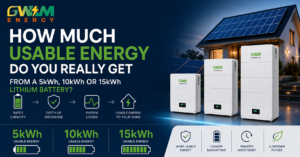
- Usable energy capacity in kWh
- Expected cycle life
- Battery Management System quality
- Inverter compatibility
- Safety protections and certifications
- Product warranty
- Local technical support
- Possibility of future capacity expansion
A reliable battery that performs consistently for years can provide much better lifetime value than a cheaper battery with limited protection or support.
The Future of Lithium Batteries in Pakistan
The direction of the energy-storage market is becoming increasingly clear. Globally, battery manufacturing scale, LFP adoption, and intense supplier competition have pushed storage costs downward, although raw-material and other market fluctuations mean prices will not necessarily decline smoothly every year.
For Pakistan, this creates an opportunity to move from basic backup power toward smarter solar-plus-storage systems.
Whether you need backup power for a home, energy storage for a commercial facility, or a scalable industrial BESS solution, declining lithium battery costs can improve the economics of investing in modern energy storage.
At GWM Energy, advanced LiFePO₄ battery and energy-storage solutions are designed for residential, commercial, and industrial applications, with intelligent BMS technology and scalable configurations for different energy requirements.
As lithium battery technology becomes increasingly affordable, the question for many Pakistani consumers may no longer be simply “Can I afford lithium?” Instead, it will be “Which lithium battery system gives me the best long-term value?”
Frequently Asked Questions (FAQs)
1. Why are lithium battery prices dropping in Pakistan?
Prices are falling due to increased global production, better manufacturing technology, and growing competition among battery brands.
2. What is the lithium battery price in Pakistan?
Prices vary depending on capacity, brand, battery quality, BMS, warranty, and exchange rates.
3. Are lithium batteries good for solar systems?
Yes. LiFePO₄ batteries offer long cycle life, fast charging, high usable capacity, and low maintenance, making them suitable for solar systems.
4. Are lithium batteries better than lead-acid batteries?
Lithium batteries generally last longer, charge faster, require less maintenance, and provide more usable energy than traditional lead-acid batteries.
5. What should I check before buying a lithium battery?
Check the capacity, cycle life, BMS, inverter compatibility, warranty, safety features, and after-sales support before purchasing.